Your Guide to UK Tax Allowances

Tax allowances and rates shape how much of your income, savings and investments you keep each year — and they change more often than most people realise.


This guide breaks down the key allowances for 2024/25, what they mean for your finances and how you can use them to plan more efficiently.

Tax Allowances & Rates

Introduction Tax Allowances

Understanding your tax obligations is the first step toward smarter financial planning.


The 2024/25 tax year comes with a mixture of frozen thresholds and reduced allowances, many of which can affect how much tax you pay across your income, dividends, savings and investments. This guide highlights the most important allowances and bands for the year ahead, giving you clarity on what to expect and helping you plan to keep more of what you earn.

Knowledge is Power

What are the key allowances for 2024/25?

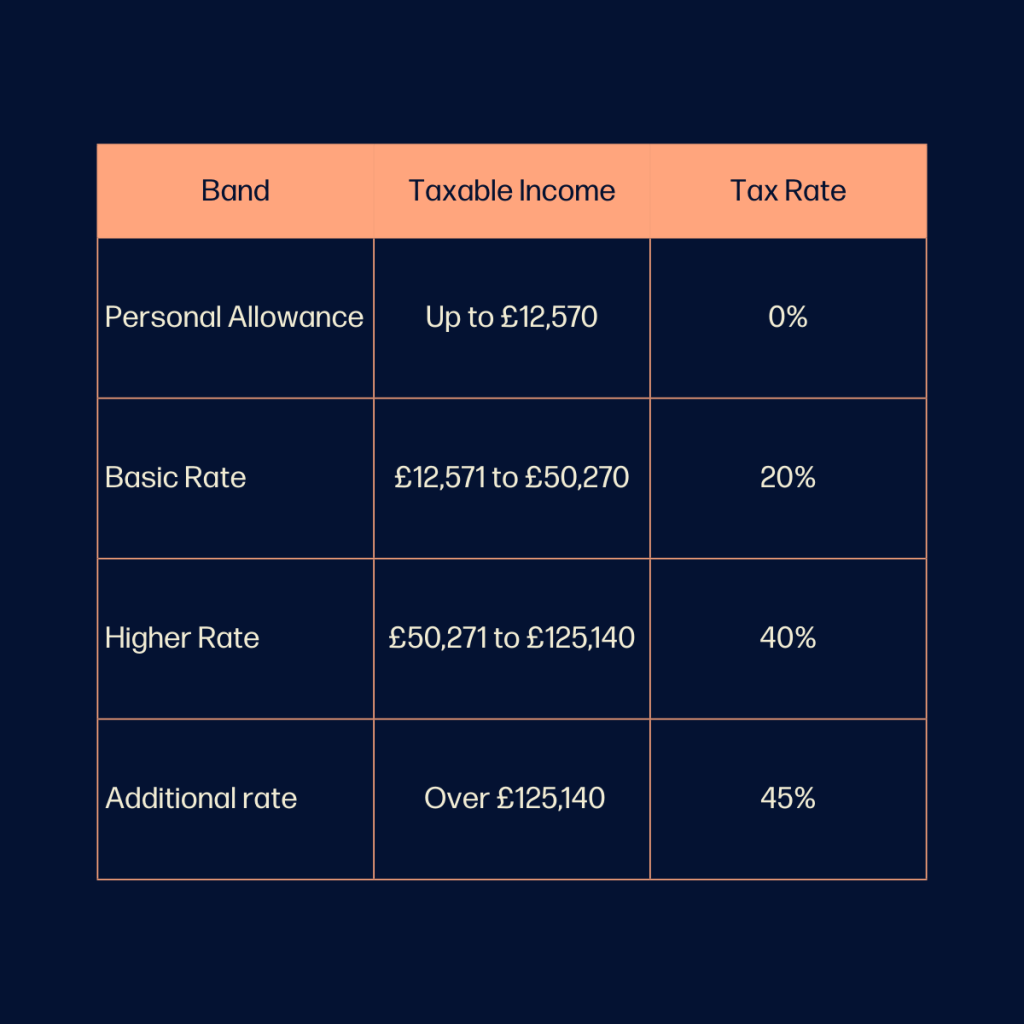
Understanding how your income is taxed begins with knowing which allowances apply to you and how the tax bands are structured. Allowances reduce the amount of income that is subject to tax, giving you a level of earnings or returns you can receive tax-free. Once those allowances have been used, the remaining income is taxed according to the relevant income tax bands.

The Personal Allowance is the amount you can earn before paying income tax. For most people, this is £12,570 for the 2024/25 tax year.


If your income exceeds £100,000, your allowance is gradually reduced, which means more of your income becomes taxable. The Personal Allowance is always applied first when calculating your tax.

The Dividend Allowance lets you receive a portion of dividend income tax-free. For 2024/25, this allowance is £500.


Any dividend income above this amount is taxed based on your income tax band, with different rates applying to basic, higher and additional rate taxpayers.

The Personal Savings Allowance determines how much interest you can earn on your savings without paying tax.


Basic rate taxpayers can earn up to £1,000 tax-free, while higher rate taxpayers can earn up to £500.
Additional rate taxpayers do not receive a Personal Savings Allowance.

ISAs remain one of the most tax-efficient ways to save and invest. In 2024/25, you can place up to £20,000 into ISAs without paying tax on interest, dividends or investment gains. You can spread this allowance across Cash ISAs, Stocks & Shares ISAs, Lifetime ISAs or Innovative Finance ISAs.

The CGT Annual Exempt Amount allows you to make a certain level of profit on assets such as investments or property (excluding your main residence) before paying Capital Gains Tax.

For the 2024/25 tax year, this exempt amount is £3,000 for individuals.

Taking Control

Understanding the Impact

Why This Matters

With thresholds frozen until 2028, more people may fall into higher tax bands over time—a process known as fiscal drag. Understanding how allowances and bands affect you helps ensure you’re not paying more tax than necessary and can plan efficiently for the year ahead.

What You Can Do

Tax planning doesn’t need to be complex. An adviser can help you make full use of your allowances, structure your income in a tax-efficient way, and ensure you remain compliant while keeping more of what you earn. The right strategy can make a meaningful difference.

Worried you’re paying more tax than you need to? Let’s check you’re making the most of your allowances.

Ready to Take Control of Your Tax Planning?

If this guide has highlighted opportunities to improve your tax efficiency – or raised questions about your own allowances – our team can help. We offer clear, personalised tax planning advice designed to keep your finances compliant, efficient and aligned with your goals.